
Heat-related illness can support a Texas construction injury claim when work conditions, unsafe scheduling, poor supervision, or lack of heat safety precautions contribute to the worker’s harm. Chavez Law Firm helps injured workers in El Paso understand whether their claim may involve workers’ compensation, a non-subscriber employer, a third-party contractor, or retaliation after reporting an injury. Heat exhaustion and heat stroke can lead to medical bills, lost wages, long-term work restrictions, and disputes over whether the condition was truly job-related. Construction workers should report symptoms quickly, seek medical care, document the conditions, and speak with an attorney before assuming they have no legal options.








Why Heat Illness Matters on Texas Construction Sites 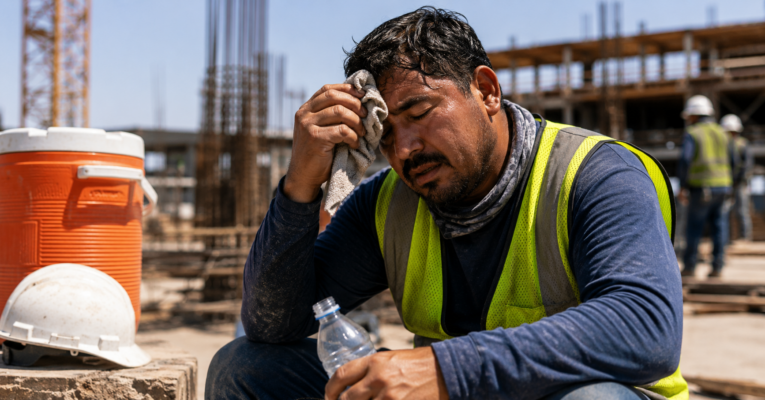
Construction work in El Paso often means long hours outside, heavy gear, physical labor, hot surfaces, and limited shade. When those conditions combine with pressure to keep working, a heat-related illness can become more than a medical emergency. It can also become a legal claim.
Chavez Law Firm understands how construction injuries affect workers and families in El Paso. A worker may miss paychecks, need emergency care, lose strength, or face pushback from an employer or insurance company. Heat illness claims are often misunderstood because there may be no broken bone, crash scene, or visible wound. That does not make the injury less serious.
Heat-related illness can include:
Heat cramps
Heat exhaustion
Heat syncope, which can cause fainting
Dehydration-related complications
Rhabdomyolysis from extreme heat and exertion
Heat stroke
Aggravation of heart, kidney, or respiratory conditions
A heat claim may depend on showing that the illness arose from work conditions. Evidence can include the temperature, work assignment, length of shift, rest breaks, water access, shade access, clothing or protective gear, prior complaints, witness statements, and medical records.


Enrique Chavez
Texas Trial Attorney
Protecting Your Rights
How Texas Construction Workers Can Be Exposed to Heat Risks
Heat illness does not only happen during record-breaking temperatures. It can happen when a worker is new to outdoor labor, returning after time away, assigned strenuous tasks, or required to wear protective equipment that traps body heat.
In El Paso construction, risk may increase during concrete work, roofing, trenching, highway work, demolition, landscaping, framing, and equipment operation. Workers may also face danger when they are paid by production speed or feel pressured not to stop.
Common unsafe conditions include:
No regular water access near the work area
No shaded or cooled rest area
No plan for acclimating workers to hot conditions
Supervisors ignoring dizziness, confusion, vomiting, or fainting
Workers being told to continue after reporting symptoms
Poor emergency response after collapse
Lack of training on heat illness warning signs
If you were hurt on a construction site, the firm’s El Paso Construction Accident Attorneys page may provide helpful information about construction injury claims: https://chavezlawfirm.law/el-paso-construction-accident-attorneys/.
Workers’ Compensation and Heat-Related Illness Claims
Texas has a unique workers’ compensation system. Not every employer carries workers’ compensation insurance. If your employer has coverage and your heat illness happened in the course and scope of employment, workers’ compensation may help pay for medical treatment and part of your lost income.
A heat-related illness claim may face challenges because insurers sometimes argue that the worker was already sick, failed to drink enough water, or cannot prove the illness came from work. This is why medical documentation matters. A doctor should know that your symptoms started during or after work in hot conditions.
If workers’ compensation applies, the claim may involve:
Emergency medical care
Follow-up appointments
Diagnostic testing
Prescription medication
Temporary income benefits
Impairment benefits in serious cases
Work restrictions or return-to-work issues
The Texas Department of Insurance Division of Workers’ Compensation handles workers’ compensation matters in Texas. A worker should not assume that a heat illness claim is invalid simply because the injury was not caused by a fall or equipment accident.
– Steve Hendrix – Adriana Solis – Luis Amador – Maria Terrazas


When the Employer Does Not Carry Workers’ Compensation
If an employer does not carry workers’ compensation insurance, the claim may be handled differently. In Texas, these employers are often called non-subscribers. A non-subscriber workplace injury case may allow an injured worker to bring a negligence claim against the employer.
In a heat illness case, negligence may involve a failure to use reasonable care to protect workers from a known heat hazard. A construction employer or site supervisor may be questioned about training, water, rest breaks, jobsite monitoring, emergency response, and whether workers were allowed to stop when symptoms appeared.
A non-subscriber claim can be more detailed than a workers’ compensation claim. It may involve proof of fault, medical causation, lost wages, and damages for pain and suffering. It may also require reviewing contracts, safety policies, payroll records, incident reports, and witness statements.
The page on Construction Accident Injury Claims in Texas may be a useful starting point for workers who need to understand injury claim options: https://chavezlawfirm.law/construction-accident-injury-claims-in-texas/.
Third-Party Claims After Heat Illness on a Construction Site
Construction sites often involve many companies at once. A general contractor, subcontractor, property owner, equipment company, staffing agency, or safety contractor may all have roles on the same site. That matters because a heat illness claim may involve someone other than the direct employer.
A third-party claim may arise when another company controlled the unsafe condition, managed the schedule, supervised the work area, or failed to follow safety responsibilities. A worker may still have a workers’ compensation claim while also pursuing a separate third-party personal injury claim, depending on the facts.
Examples may include:
A general contractor requiring fast production without heat breaks
A site manager failing to provide shaded recovery areas
A company assigning workers to extreme exertion without proper planning
A staffing agency sending workers without heat safety training
A contractor ignoring symptoms after a worker asked for help
Subcontractors may have special concerns because responsibility can depend on who controlled the work and who had the power to fix the danger. The firm’s page for injured subcontractors discusses this type of issue: https://chavezlawfirm.law/injured-as-a-subcontractor/.
What Evidence Helps Prove a Heat Illness Claim
Heat illness claims often turn on details. You may know what happened, but the insurance company may ask for proof. Start gathering information as soon as you safely can.
Helpful evidence may include:
Photos of the work area, shade conditions, and water stations
Weather information from the day of the illness
Names of coworkers who saw your symptoms
Text messages reporting heat concerns
Incident reports or supervisor notes
Timecards showing shift length
Medical records linking symptoms to workplace heat
Ambulance or emergency room records
Safety manuals and training materials
Prior complaints about heat conditions
Do not rely only on memory. Heat illness can cause confusion and weakness, which makes written proof even more valuable. If you can, write down what happened, when symptoms started, who was present, what you were doing, and how supervisors responded.
The page on Reporting a Construction Accident Injury may help workers think through the reporting process: https://chavezlawfirm.law/reporting-a-construction-accident-injury/.
Medical Care Is Critical After Heat Exposure
Heat exhaustion and heat stroke can affect the body quickly. Some workers feel better after resting, then experience worsening symptoms later. Others develop complications involving the kidneys, heart, muscles, or brain.
Seek medical care if you experience confusion, fainting, vomiting, severe headache, rapid heartbeat, muscle breakdown symptoms, disorientation, or a very high body temperature. Tell medical providers that you were working in heat when symptoms began. That detail can become important in a later claim.
Medical records can help show:
The diagnosis
The timing of symptoms
Work restrictions
Treatment costs
Whether the illness caused lasting harm
Whether heat aggravated another condition
A worker should not return to full-duty construction work before being medically cleared. Returning too soon can worsen the injury and give an insurer an argument that the later symptoms came from something else.
How Lost Wages and Damages May Be Evaluated
A heat illness claim can affect income in several ways. You may miss days or weeks of work. You may return with restrictions. You may be moved to lighter work with fewer hours. In severe cases, you may not be able to return to construction at all.
Depending on the type of claim, recoverable losses may include medical expenses, lost income, reduced earning ability, physical pain, mental distress, impairment, and future care needs. Workers’ compensation benefits are usually limited compared with a personal injury lawsuit, but every case depends on the employer’s coverage status and who may be legally responsible.
Texas personal injury claims are also affected by deadlines. In many injury cases, Texas Civil Practice and Remedies Code Section 16.003 gives a two-year limitations period. Other deadlines can be shorter, especially for workers’ compensation notices, administrative claims, or claims involving government entities. Speak with an attorney early so deadlines do not pass.
Retaliation After Reporting a Heat Injury
Some construction workers worry about being fired, demoted, or removed from future jobs after reporting heat illness. Texas Labor Code Chapter 451 prohibits certain retaliation tied to a good-faith workers’ compensation claim, hiring a lawyer for the claim, starting a workers’ compensation proceeding, or testifying in such a proceeding.
Retaliation can include more than termination. It may include reduced hours, worse assignments, threats, write-ups after a clean work history, or sudden discipline after the worker reports the injury.
If you believe you are being punished for reporting heat illness, keep records. Save texts, emails, schedules, pay stubs, disciplinary notices, and names of witnesses. Chavez Law Firm also handles employment law matters in El Paso, and the firm’s Employment Law Attorneys page may be helpful: https://chavezlawfirm.law/el-paso-employment-law-attorneys/
What To Do After Heat Illness on a Construction Site
After a heat-related construction injury, take practical steps to protect your health and claim.
Get medical help right away.
Report the illness to a supervisor in writing.
Ask for a copy of any incident report.
Write down the jobsite conditions and symptoms.
Identify coworkers who saw what happened.
Keep medical appointments and follow restrictions.
Save proof of missed work and lost wages.
Do not give a recorded statement without understanding your rights.
Contact an attorney if the claim is disputed, serious, or involves retaliation.
You do not have to know the exact legal category of your claim before asking for help. A lawyer can review whether the case may involve workers’ compensation, a non-subscriber claim, a third-party claim, or an employment retaliation issue.
Speak With an El Paso Construction Injury Attorney
Heat illness can leave a construction worker feeling physically weak, financially stressed, and unsure whom to trust. Chavez Law Firm helps injured workers in El Paso evaluate their options, gather evidence, and respond when employers or insurers dispute a valid injury claim. The firm offers a free consultation and can help you understand the next step based on your specific facts.
You can contact the firm through the Contact Us page: https://chavezlawfirm.law/contact-us/
This article is for informational purposes only and is not legal advice. Consult an attorney about your specific situation.

|
|
|