
August can raise teen driving accident risks in El Paso because it falls within the high-risk summer driving period while school-year traffic, sports, work, and family schedules begin changing. More time behind the wheel, teen passengers, distraction, speeding, fatigue, and unfamiliar traffic patterns can combine quickly.
You can use August as a safety reset for your family. Review passenger limits, phone rules, routes, vehicle condition, and the steps your teen should take after a collision. When a serious crash occurs, the facts need careful review. A young driver is not automatically responsible because of age.








Why August Can Raise Teen Driving Accident Risks 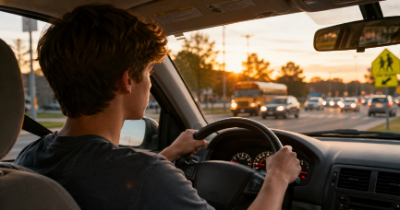
August falls within the period that AAA calls the “100 Deadliest Days,” which runs from Memorial Day through Labor Day. AAA reported in 2026 that more than 30 percent of fatal crashes involving teen drivers occur during this summer period. You can review the AAA safety report at https://newsroom.aaa.com/2026/05/aaa-urges-drivers-to-practice-100-days-of-safe-driving-this-summer/.
The statistic does not prove that August is the single most dangerous month. It shows that August falls within a season when teen driving risks deserve close attention. In El Paso, late July and August can also bring shifting school schedules, earlier mornings, sports practices, work shifts, and heavier traffic near campuses.
Teen drivers have less experience recognizing hazards and making quick decisions than older drivers. Your teen may have trouble judging how fast another vehicle is approaching, how much space is needed for a turn, or how quickly traffic can stop near a school entrance. Confidence may grow during the summer even while judgment and vehicle-control skills are still developing.
School-Year Traffic Changes Familiar Routes
School-year traffic does not return on the same date across every El Paso-area district. Some campuses begin classes in late July, while others begin in August. Families should prepare for changing traffic patterns throughout both months.
A route that seemed quiet during summer can become crowded with school buses, parent pickup lines, students walking or biking, and drivers commuting to work. The first weeks of a new school schedule can be unpredictable because families are learning departure times, drop-off procedures, parking rules, and new routes.
Texas recorded 781 crashes in school zones during 2024, resulting in two deaths and 17 serious injuries. The state also recorded 2,480 crashes involving school buses, with 11 deaths and 93 serious injuries. You can review the Texas Department of Transportation information at https://www.txdot.gov/safety/traffic-safety-campaigns/back-to-school.html.
The risk can extend beyond a marked school zone. Congestion may build on neighborhood streets, frontage roads, parking lots, and nearby intersections. A teen who is worried about arriving late may follow too closely, make an unsafe turn, or look at a navigation app instead of watching traffic.
Safety Reset: Practice the route before the first busy morning. A calm test drive can help your teen identify difficult turns, school-zone boundaries, pickup lines, and safer places to stop.


Enrique Chavez
Texas Trial Attorney
Protecting Your Rights
More Freedom Can Mean More Driving Exposure
Your teen may spend more time driving during summer because of work, sports, social plans, errands, and family responsibilities. By August, a young driver may be making several trips each day instead of driving only during supervised practice.
More time on the road creates more exposure to possible hazards. It can also place a young driver in situations that have not been practiced often, including:
- Driving after an evening work shift
- Carrying friends to school or a sports activity
- Merging into fast-moving traffic
- Following an unfamiliar route
- Driving while tired, upset, or distracted
- Reacting to sudden stops near a campus
- Traveling during sunrise or sunset glare
Parents can reduce risk by asking where the teen is going, who will be in the vehicle, which route will be used, and when the teen expects to return.
Teen Passengers Can Increase Distraction
Friends can make a routine trip more distracting. A passenger may change the music, show the driver a phone, give last-minute directions, or encourage speeding.
The National Highway Traffic Safety Administration reports that a teen driver with one teenage passenger is two and one-half times more likely to engage in potentially risky behavior than a teen driving alone. The likelihood rises further with multiple teenage passengers. You can review NHTSA teen driving information at https://www.nhtsa.gov/road-safety/teen-driving.
Texas provisional license rules help limit this risk. A driver under 18 with a provisional license generally may not carry more than one passenger under 21 who is not a family member. Driving is also generally restricted between midnight and 5:00 a.m. unless the trip involves work, a school activity, or an emergency. Texas also restricts cellphone use by provisional license holders except during an emergency. Current rules are available from the Texas Department of Public Safety at https://www.dps.texas.gov/section/driver-license/texas-provisional-license-teen.
– Steve Hendrix – Adriana Solis – Luis Amador – Maria Terrazas


Phone Use Competes With a New Driver’s Attention
A notification can pull your teen’s eyes and thoughts from the road as traffic stops. Phones used for maps, music, messages, or social media compete with the attention needed to identify hazards.
Set one clear family rule: the phone stays stored and out of reach while the vehicle is moving. Navigation should be set before departure. A passenger can handle directions when needed, but the driver should not pass a phone back and forth.
The firm’s page about texting while driving explains how distracted driving can cause serious collisions and affect an injury claim:
https://chavezlawfirm.law/texting-while-driving/
Speeding Leaves Less Time to Correct a Mistake
Speeding is dangerous for a new driver because it shortens reaction time and increases stopping distance. NHTSA reports that speeding was a factor for 33 percent of passenger-vehicle teen drivers involved in fatal crashes during 2024.
Driving at the posted limit may still be unsafe when congestion, visibility, weather, or road conditions require a lower speed. Near schools, a few extra seconds are far less costly than a preventable crash.
You can reinforce safe speed choices by driving the route with your teen and pointing out blind corners, traffic backups, crosswalks, bus stops, and areas where vehicles enter suddenly.
Fatigue Can Build as Summer Ends
August schedules can become crowded with early practice, school, work, homework, and social activities. Fatigue can slow reaction time and reduce awareness.
Make it clear that your teen can call for a ride when tired, upset, ill, or unable to focus. A missed shift, late arrival, or changed plan is safer than driving without enough attention.
You can also reduce fatigue-related risk by setting reasonable limits on late activities, encouraging consistent sleep, and avoiding schedules that require a teen to drive after a long day.
What Parents Can Do Before School-Year Traffic Returns
A written family driving agreement can remove uncertainty. It should identify approved routes, passenger limits, curfew, seat belt requirements, phone storage, and the consequences for breaking safety rules.
Take these practical steps:
- Drive school, work, and activity routes with your teen
- Review difficult intersections, merges, and school-zone boundaries
- Check tires, lights, mirrors, windshield wipers, and brakes
- Require every occupant to use a seat belt
- Set a realistic departure time that prevents rushing
- Discuss how to respond when friends pressure the driver
- Place insurance and emergency information in the vehicle
- Review what to do after a collision
- Confirm that your teen understands Texas provisional license rules
- Save family, insurance, and emergency contacts before the first trip
What to Do After a Teen Driving Accident
Call 911 when anyone may be injured or when the scene creates a traffic hazard. Move to a safer location when it is possible to do so, but do not leave the scene. Exchange driver, vehicle, and insurance information.
When it is safe, photograph:
- Vehicle positions
- Damage to every involved vehicle
- Debris and skid marks
- Traffic signals and signs
- Road and lighting conditions
- Visible injuries
- Nearby businesses, homes, or cameras
Get witness names and contact information. Avoid admitting fault or guessing about what happened. Ask for the police report number and keep all documents related to towing, repairs, transportation, and insurance communications.
The firm’s guide provides more information about protecting your health and preserving evidence:
https://chavezlawfirm.law/steps-to-take-immediately-after-a-personal-injury-accident-in-texas/
Seek Medical Care and Follow Through
Some injuries are obvious at the scene. Others, including concussions, neck injuries, back injuries, and soft-tissue injuries, may become more noticeable after the initial shock fades.
Seek prompt medical evaluation when you or your teen has pain, dizziness, confusion, numbness, weakness, nausea, headaches, or limited movement. Describe every symptom accurately. Keep discharge papers, bills, prescriptions, work or school restrictions, and follow-up appointment records.
The firm’s information about prompt medical treatment explains why consistent care and documentation may matter:
Who May Be Responsible for the Crash
A teen driver is not automatically at fault. Responsibility depends on what each driver did and whether that conduct caused the collision. Another motorist, vehicle owner, employer, manufacturer, property owner, or other party may share responsibility based on the facts.
A parent is not automatically personally responsible for every accident caused by a child. Questions involving vehicle ownership, insurance coverage, permission to drive, negligent entrustment, and the teen’s driving history require a fact-specific review.
Texas generally allows two years to file many personal injury lawsuits. Special rules can affect a person who was younger than 18 when injured. Claims involving governmental entities may also require earlier notice. You can review the Texas limitations statutes at https://statutes.capitol.texas.gov/Docs/CP/htm/CP.16.htm.
Do not assume that every deadline will be extended because a child was involved. The correct deadline depends on the claim, the parties, and the specific facts.
Talk With an El Paso Car Accident Lawyer
A serious teen driving accident can affect medical care, school attendance, work, transportation, and family finances. Chavez Law Firm can review the collision, insurance coverage, available evidence, and legal options that may apply.
The firm serves El Paso, Texas, El Paso County, and nearby areas. Learn more at:
https://chavezlawfirm.law/el-paso-personal-injury-lawyers/
https://chavezlawfirm.law/attorney-enrique-chavez-jr/
Call 915-995-5777 or visit:
https://chavezlawfirm.law/contact-us/
This article is for informational purposes only and is not legal advice. Consult an attorney about your specific situation.

|
|
|